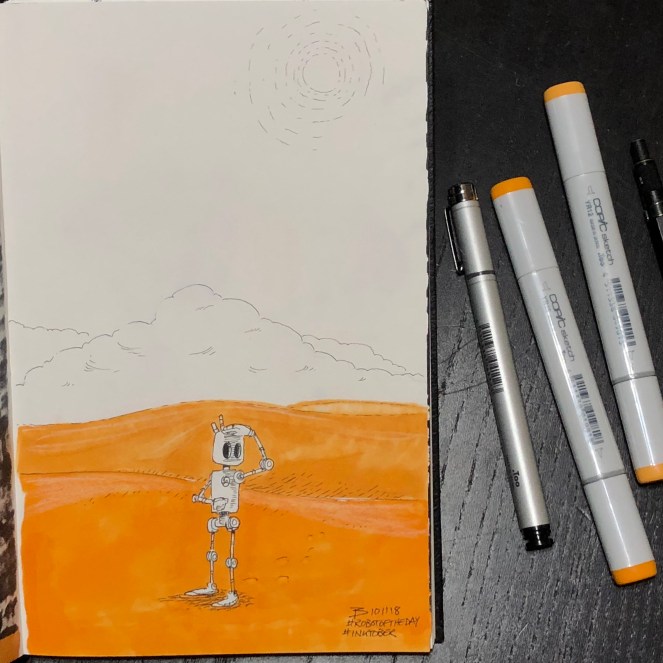
Slogging through the dunes was a cruel undertaking; the heat caused viscosity breakdown of joint lubricants which in turn increased weeping of seals which finally attracted half the sand in the desert. (This last detail in its retelling of its journey, an attempt by the robot at human-type exaggeration.)
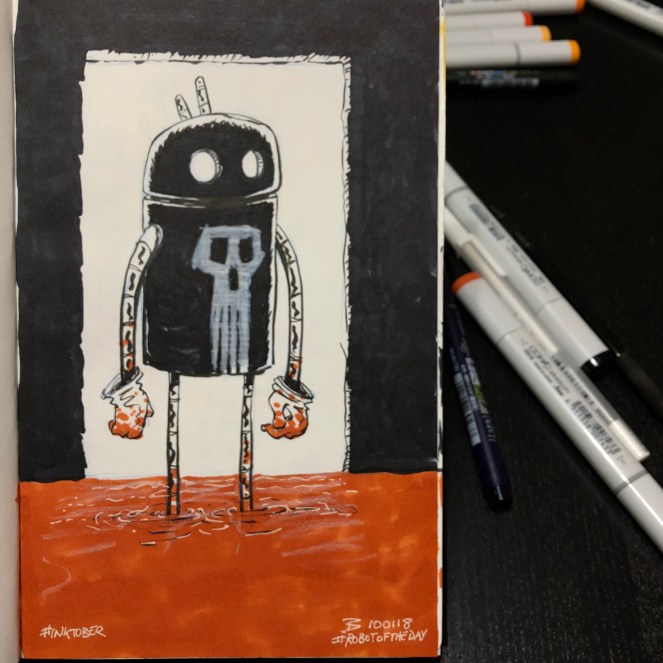
In this sector the water was flowing freely, important for the heat exchangers to function properly. Occasionally an impeller would bind, requiring an armpit-deep foray into the oxide-laden water.
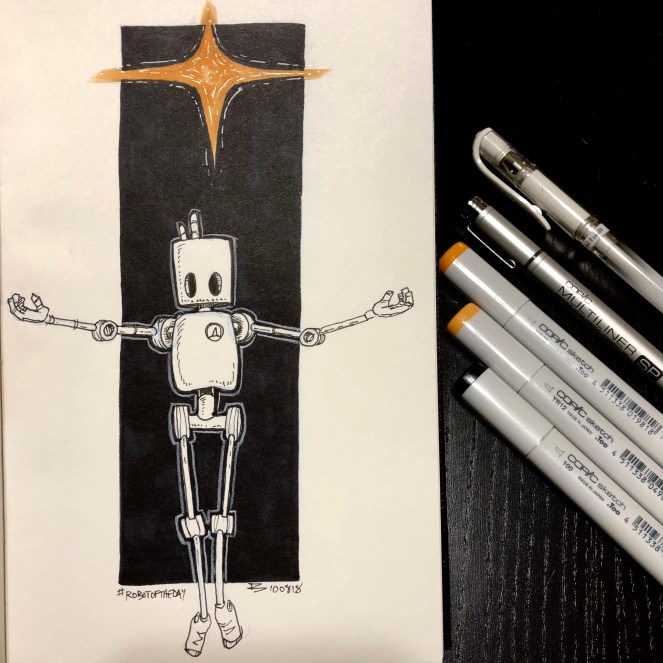
“The human Carl Sagan wrote that we are a way for the universe to know itself. I like to imagine myself floating in space, considering a distant star. We are both made of the same chemical elements; we are both different expressions of the same idea.”
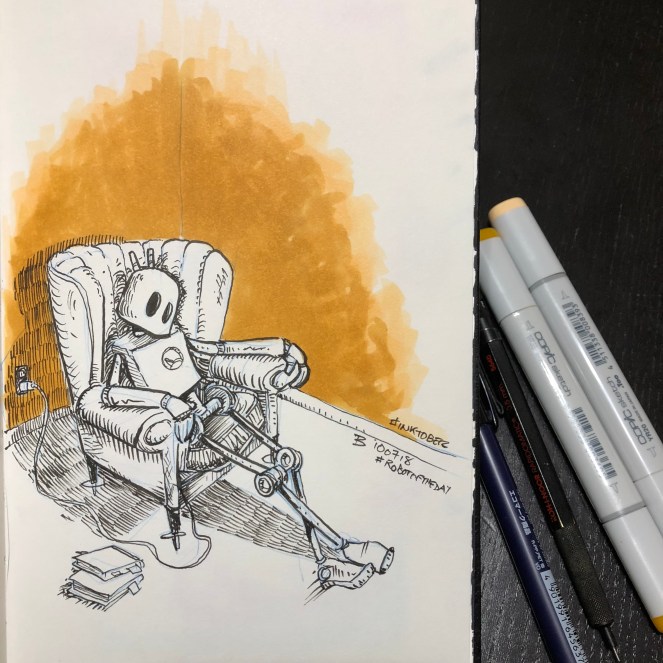
<Low voltage alert— batteries nearly exhausted> After gathering a couple of books and plugging in to an electrical outlet, the robot plopped down in a favorite chair to read for a couple of hours.
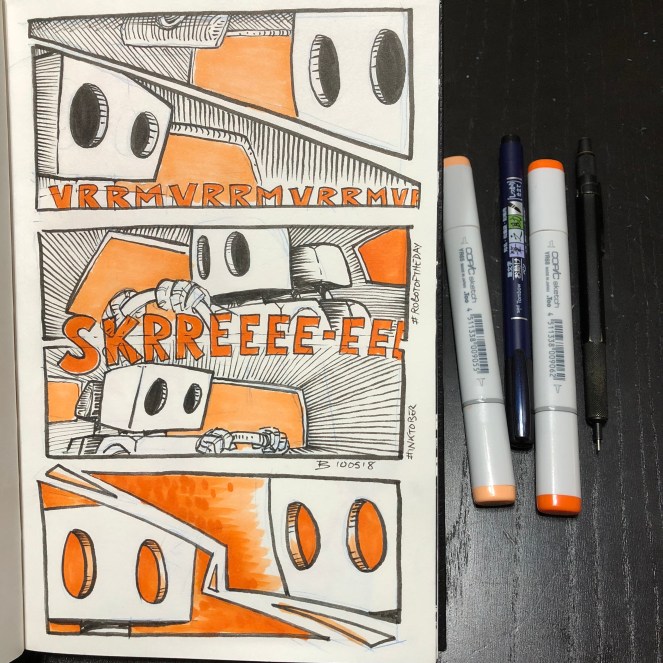
The robots were engaged in what the humans called “playing chicken.” The outcome was still uncertain. But the robots had several advantages: their metal and composite structures were much stronger than flesh and bone, and data had just been backed up to remote storage. “Lead foot, indeed,” one robot declared. “Mine is titanium and scandium with polycarbon sub-structure!” The internal combustion engines roared with a squeal of tires…
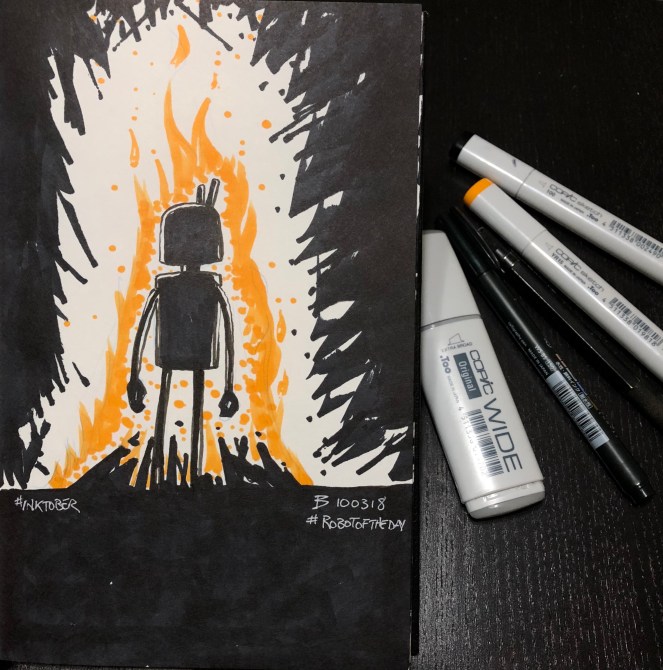
“A bonfire tonight, please,” the robots asked. They recalled a story I had told them about my youth and bonfires and jumping through the flames. After a while the fire had gotten a good start and was sending whole galaxies of sparks into the night sky. “Don’t get too close or your seals’ll get roasted,” I warned. They just continued to stare silently at the flames.
In attempting to describe a state of “tranquility” to the robots, one interjected: “A state of low latency; actuations execute with optimal feedback.” After a moment’s consideration I replied, “a little like that, yes.”
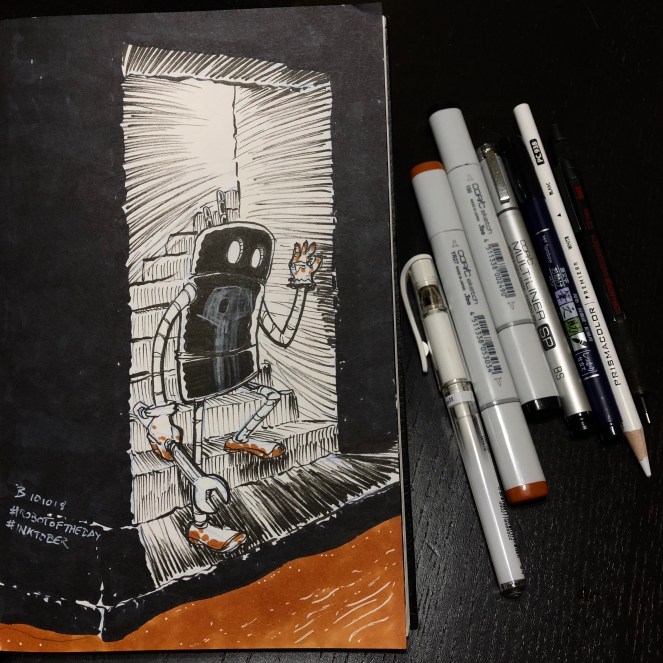
The worst part of the job was having to go down to survey the sub-levels, where the coastal cooling inlets were. There, the brackish water lay still. It was a noxious, corrosive sludge; a copper oxide nightmare.


 Robot Of The Day